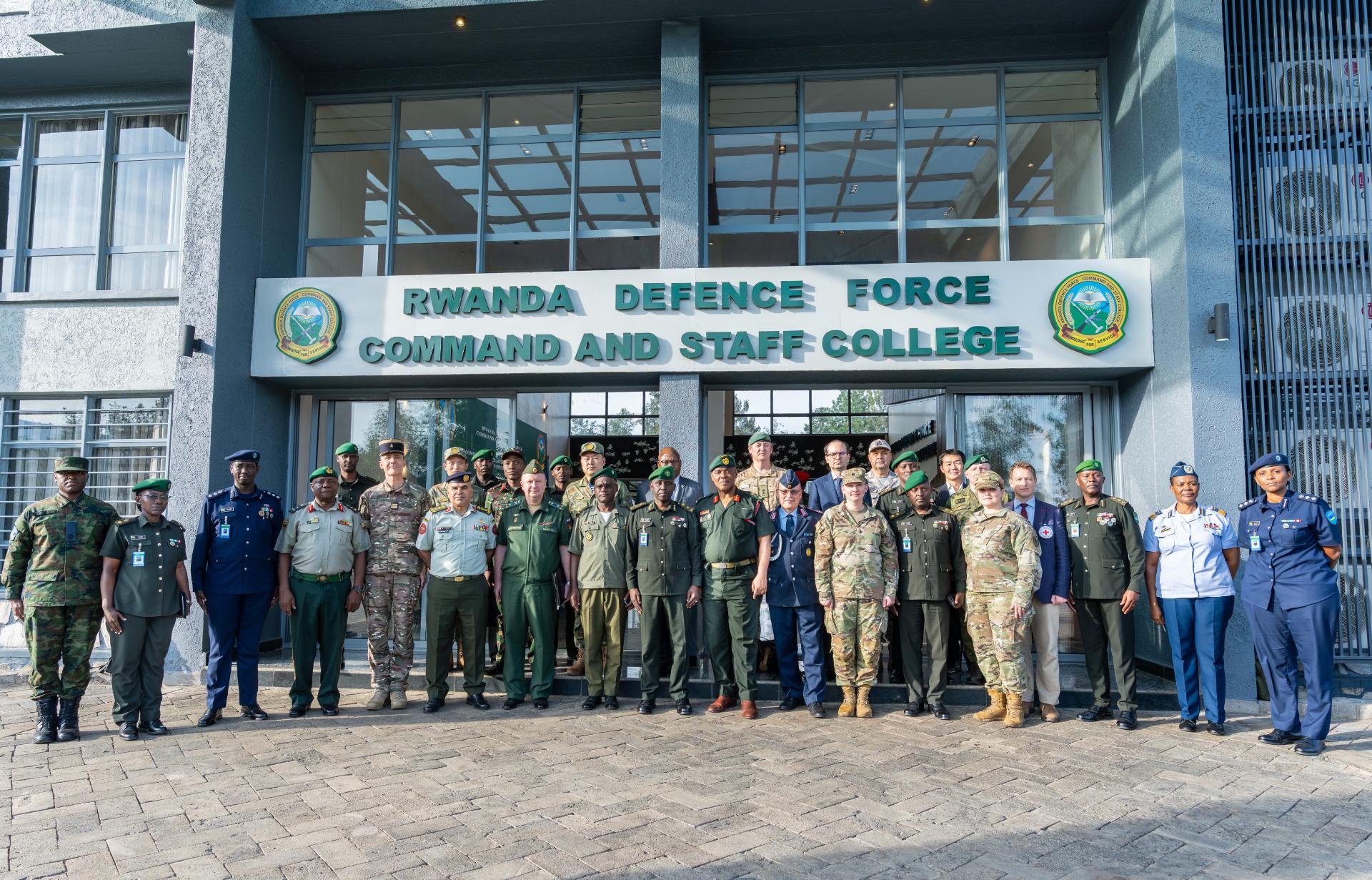
Senior Command and Staff Course 05 conducted a National Study Tour on Rwanda’s Health Policies, Strategies and Initiatives


Musanze 13 February 2017
Rwanda Defence Force Command and Staff College in its mission to develop students’ intellectual ability to understand national, regional, and global security challenges, organized a study tour on the Health Sector from 6th - 11th February 2017 for Senior Command and Staff Course 05.

The theme of the study tour was “Rwanda’s health sector policies and initiatives and how they contribute towards sustainable peace, security, and economic development”.
The tour aimed at providing first-hand information on the status of the Rwandan health sector, and the existing policies and initiatives that are there to maintain and improve the already existing impressive performance.

After a policy-level briefing by the Minister of Health at the Ministry HQ, the course was divided into four teams and dispersed to the 4 provinces and selected districts, namely: Burera and Gakenke in the Northern Province, Kirehe and Ngoma in Eastern Province, Muhanga and Nyamagabe in Southern Province, Rutsiro and Ngororero in Western Province.

At the province level, teams met with the Governors and were briefed on the implementation of health policies, programs, and initiatives. Thereafter, teams visited provincial referral/teaching hospitals.

A group photo with the Governor of Western Province

A group photo with the Governor of Southern Province

A group photo with the Governor Northern Province

A group photo with the Governor Eastern Province
During interactions with various leaders, health sector officials, and citizens who are the beneficiaries of the health services, students managed to learn about the challenges involved but also home-grown solutions to address those challenges, the achievements so far, and the way forward.

On the second leg, district hospitals were visited to observe how health services contribute to the well-being of the population by providing quality health services that are acceptable and accessible to the majority of people.

The last leg of the tour was to visit different Health centers and Health posts and conduct interviews with different stakeholders at the grassroots level.

Students sought the perceptions of community members about the health services provided to them.

Most importantly, the tour allowed students to get feedback from the communities that are beneficiaries of health services and other socio-economic programs, hence linking health sector policies, programs, and initiatives to peace, security, and economic development.

Students and faculty staff appreciated the effort, commitment, and cooperation offered by various leaders, health sector officials, and the people.

The tour ended on Saturday 11th February 2017.


Topics

HASHEMITE KINGDOM OF JORDAN INDEPENDENCE DAY CELEBRATION
On 25th May 2026, the Rwanda Defence Force Command and Staff Course (RDFCSC) celebrated the 80th Independence Day of the Hashemite Kingdom of Jordan.
…
THE COMMANDER OF THE FRENCH AFRICA COMMAND VISITS RWANDA DEFENCE FORCE COMMAND AND STAFF COLLEGE
On 20 May 2026, the Commander of the French Africa Command, Major General Pascal IANNI visited the Rwanda Defence Force Command and Staff College (RDF…

THE RWANDA DEFENCE COMMAND AND STAFF COLLEGE SECURITY SYMPOSIUM 2026 TOOK PLACE AT RWANDA MILITARY ACADEMY GAKO
The National Security Symposium 2026 on the theme :" Contemporary African Security Landscape” brought together security leaders, academics, and key…

JUNIOR COMMAND AND STAFF COURSE INTAKE 26 GRADUATED IN MUSANZE DISTRICT
On 30 April 2026, a total of 74 officers comprising of 70 from the Rwanda Defence Force (RDF), 2 from the Rwanda National Police (RNP), and 2 from the…

SENEGAL INDEPENDENCE DAY CELEBRATION
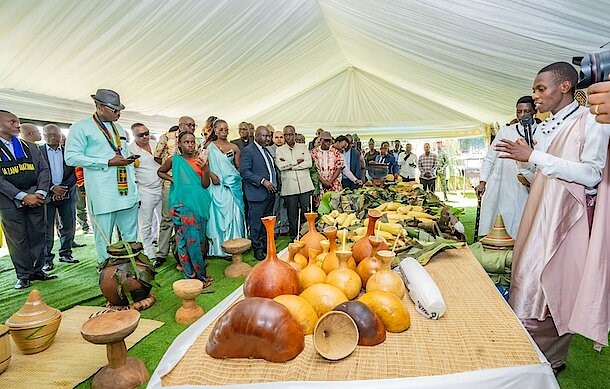
RDF COMMAND AND STAFF COLLEGE HOLDS ANNUAL CULTURAL DAY
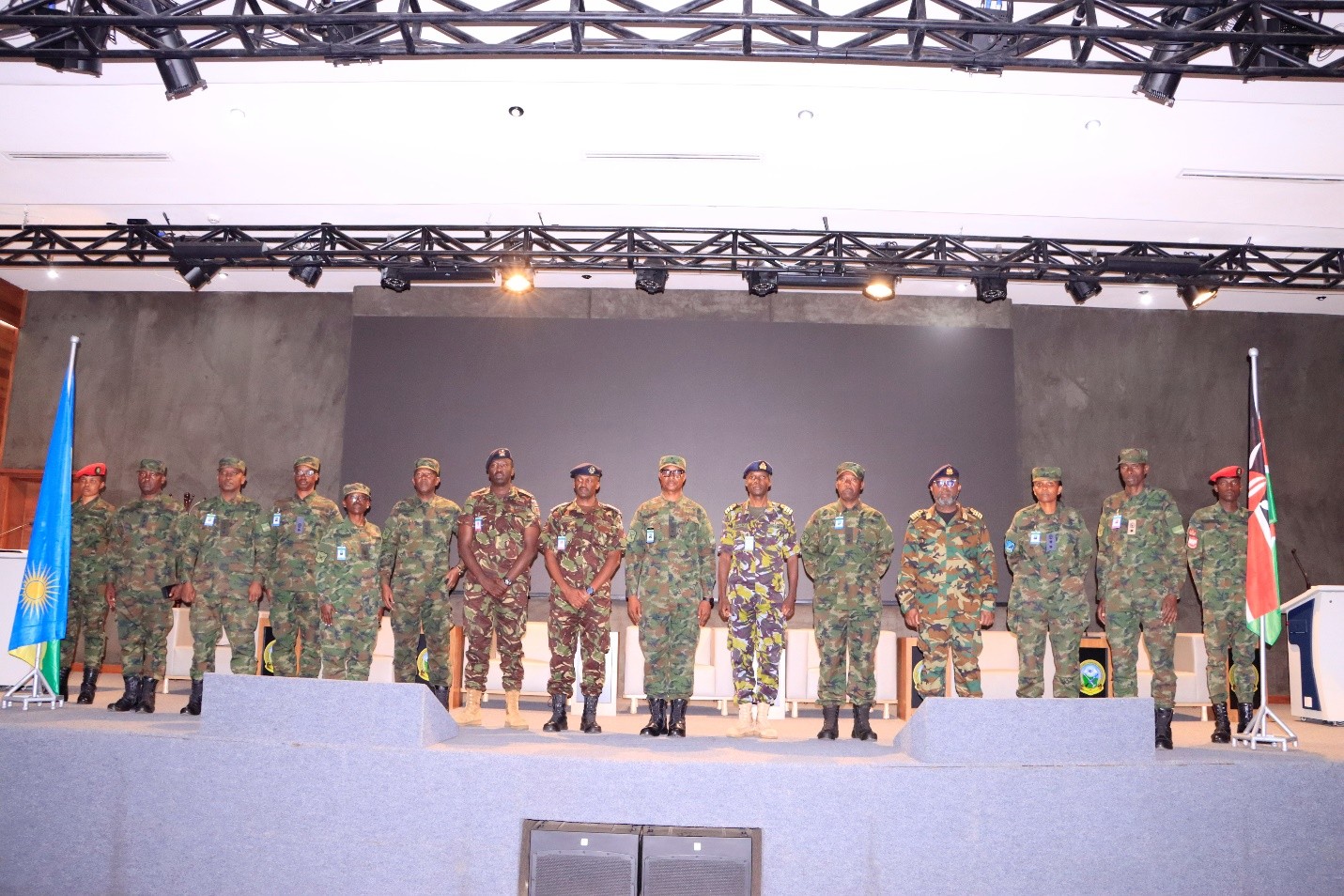
KENYA INDEPENDENCE DAY CELEBRATION
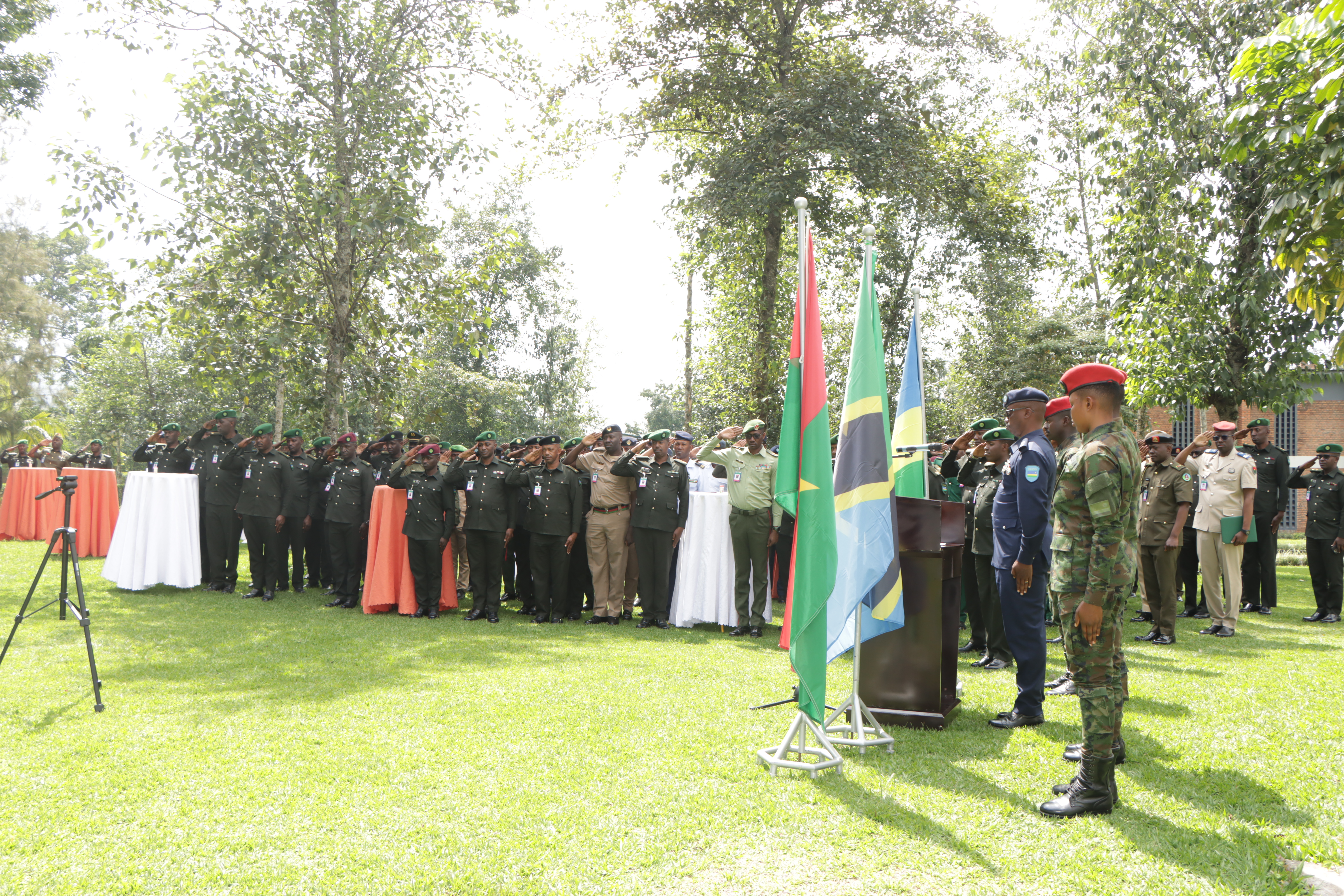
TANZANIA AND BURKINA FASO INDEPENDENCE DAY CELEBRATION